Ultimate Guide to Manicure Nail Shapes
The natural nail, current length, lifestyle, and personal preference all matter. Sometimes a client already has enough length for the shape they want. Sometimes the same look needs extra support, added length, or a small correction to one or two nails. At Mars Nails, we usually start with the look the client actually wants and then work out what the natural nail needs to make that shape practical.
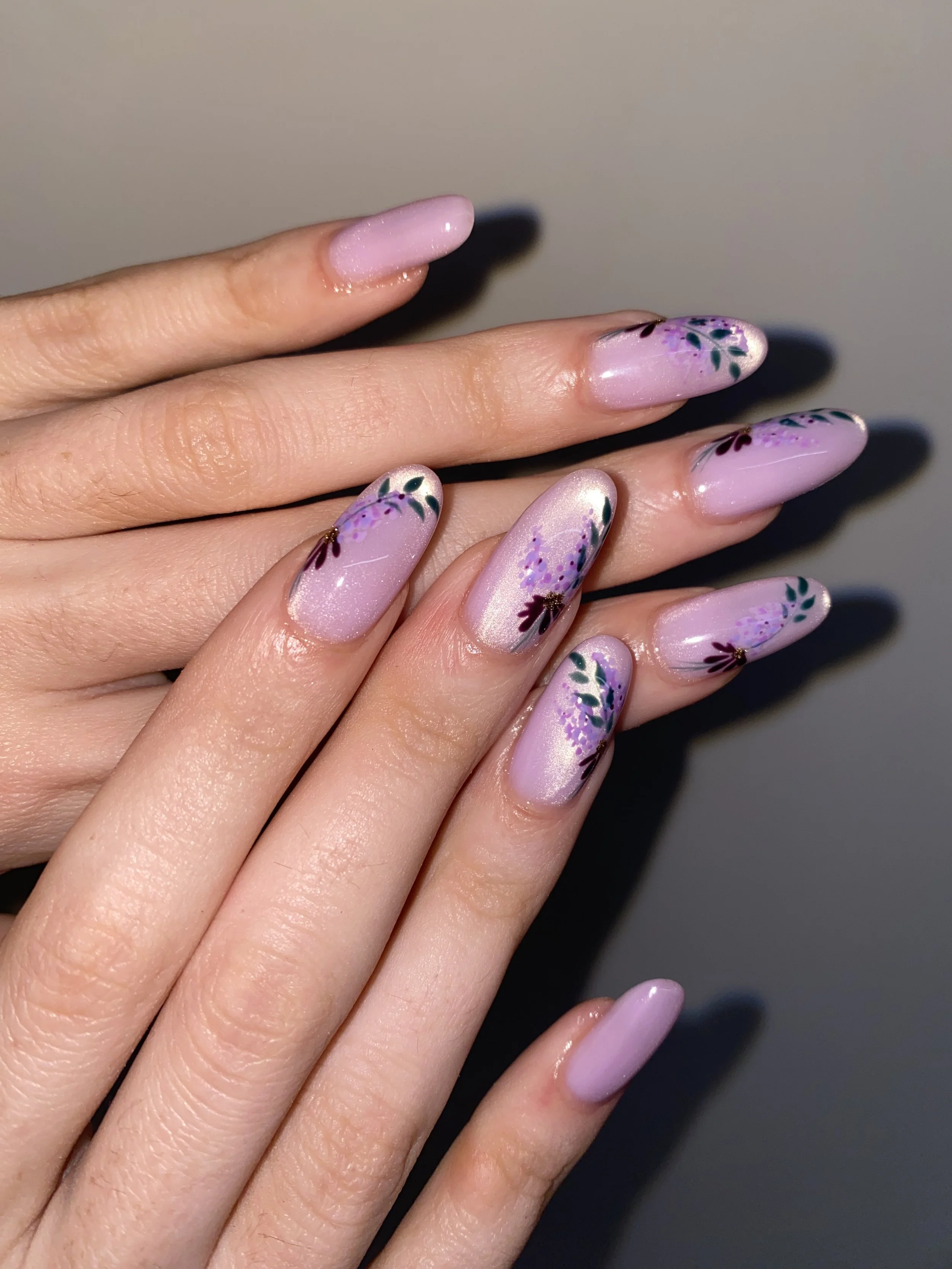
How We Choose a Nail Shape
There is no single shape that is automatically “best” for a certain hand.
We look at the natural nail first - its width, growth direction, free edge, and how much length is already there. Then we consider how the client uses their hands and what they feel comfortable wearing.
Personal preference matters just as much.
A client with wider nail beds may still love a square shape. Someone with long fingers may prefer short round nails. Neither choice is wrong just because a proportion guide suggests something else.
Some shapes can visually change the appearance of the hand. Oval and almond often create a more tapered look, while square gives a stronger, more graphic outline. Those are useful observations, not rules.
The final shape should look intentional, feel comfortable, and work with the nail underneath.
Overview of Common Nail Shapes
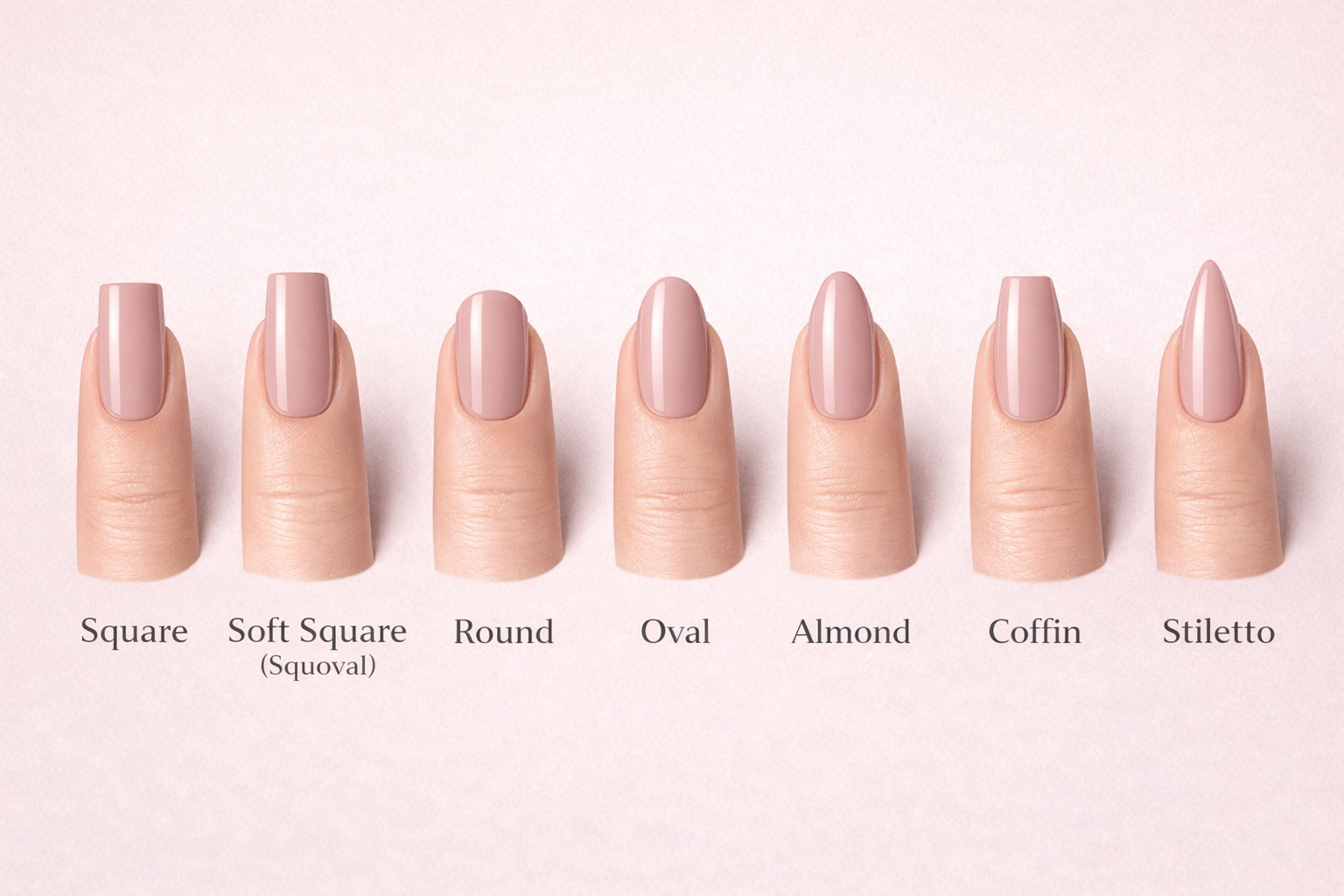
Overview of Common Nail Shapes (Without Ranking Them)
A quick comparison of popular nail shapes - what they look like, why clients choose them, and how they typically wear in everyday life.
| Shape | Best for | Why clients choose it |
|---|---|---|
|
Shape
Round
|
Best for
Function, hygiene, comfort, conservative professional environments
|
Why clients choose it
|
|
Shape
Soft Square (Squoval)
|
Best for
Everyday wear, office-friendly style, Manhattan professionals
|
Why clients choose it
|
|
Shape
Square
|
Best for
Clients who want a strong, graphic look and structured lines
|
Why clients choose it
On some hands, square nails can make the hand appear wider - many clients choose it intentionally for its bold, clean geometry.
|
|
Shape
Oval
|
Best for
Refined, classic styles with a softer outline
|
Why clients choose it
|
|
Shape
Almond
|
Best for
Clients who like a tapered look and a slimmer silhouette
|
Why clients choose it
Often recommended when visual elongation is desired, but never mandatory - preference comes first.
|
|
Shape
Ballerina (Coffin)
|
Best for
Modern, fashion-forward looks that need length and structure
|
Why clients choose it
|
|
Shape
Stiletto
|
Best for
Creative expression, special occasions, bold personal style
|
Why clients choose it
|
Shape and Length Are Two Different Decisions
This is where the service choice starts to matter. A client may like a particular shape but already have enough natural length to create it. In that case, the question is whether the natural nail is strong enough to hold that shape comfortably. If you already have the length you want but your nails need more stability, a Builder Gel Manicure adds structured support over your existing natural length.
This is useful for natural nails that flex, peel, lose their shape as they grow, or simply need more support at medium or longer lengths. Builder gel does not have to change the length dramatically. Its main job here is support.
When the Shape Needs More Length
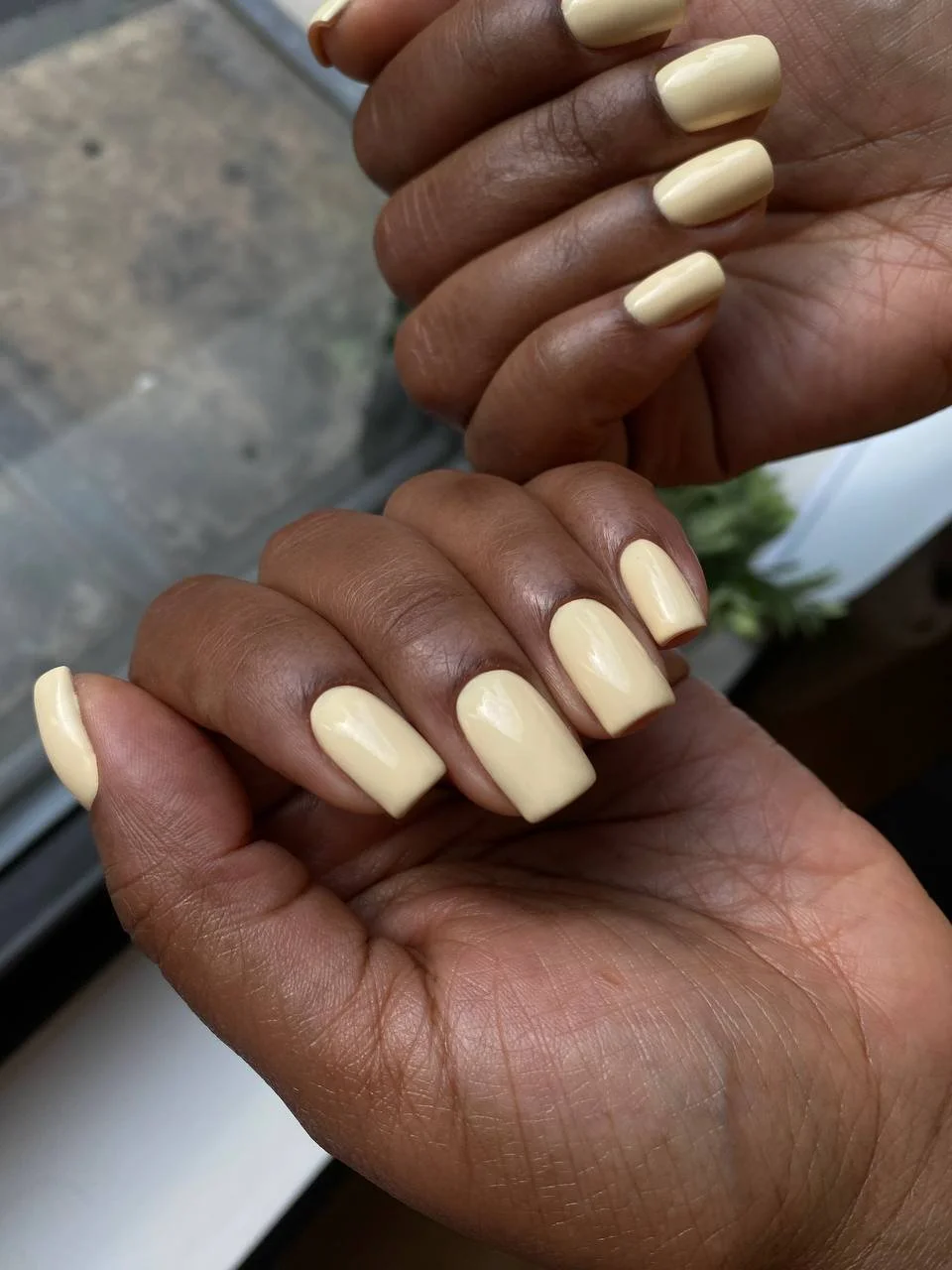
Some shapes need more free edge before their proportions really work.
Ballerina or coffin, for example, needs enough length for the sides to taper inward and still leave a visible straight edge. Stiletto needs enough distance for the sides to narrow into a point. Even a longer almond shape can look very different when there is not enough natural length to build the taper properly.
If the desired shape requires substantially more length than the natural nail currently has, Nail Extensions make more sense.
With sculpted extensions, the technician can build the length and shape together instead of trying to force a long shape onto a short natural nail.
That is the main distinction. Builder Gel supports the length you already have. Extensions create additional length.
What If the Length Is Fine but the Shape Is Uneven?
Sometimes the overall length is already right, but individual nails do not match. A corner may have broken. One sidewall may be missing. A nail may grow slightly unevenly, or one free edge may need to be rebuilt so the set looks balanced again. That is different from strengthening every natural nail, and it does not necessarily require a full extension set.
For this type of targeted work, Hard Gel Modeling can be used to rebuild missing structure or correct the shape of individual nails. The goal may be very small - restoring one corner, balancing a sidewall, or adding a little length to one damaged area.
So the service choice becomes:
Builder Gel - support over existing natural length.
Nail Extensions - substantial added length.
Hard Gel Modeling - targeted rebuilding or shape correction.
Final Thought
The best nail shape is not the one a chart says you should wear.It is the shape you like, adjusted so it works with your natural nails and the length you are comfortable maintaining. Sometimes that only means filing the nail differently. Sometimes it means adding support. Sometimes more length is needed. And occasionally one small area needs to be rebuilt so the whole set looks balanced again.
That is why we choose the shape first - and then decide what the nail actually needs to support it.